
 RU
RU
 CN
CN
Brand 康师傅 (Master Kong): how a mass‑market leader is adapting to China’s “new consumer”
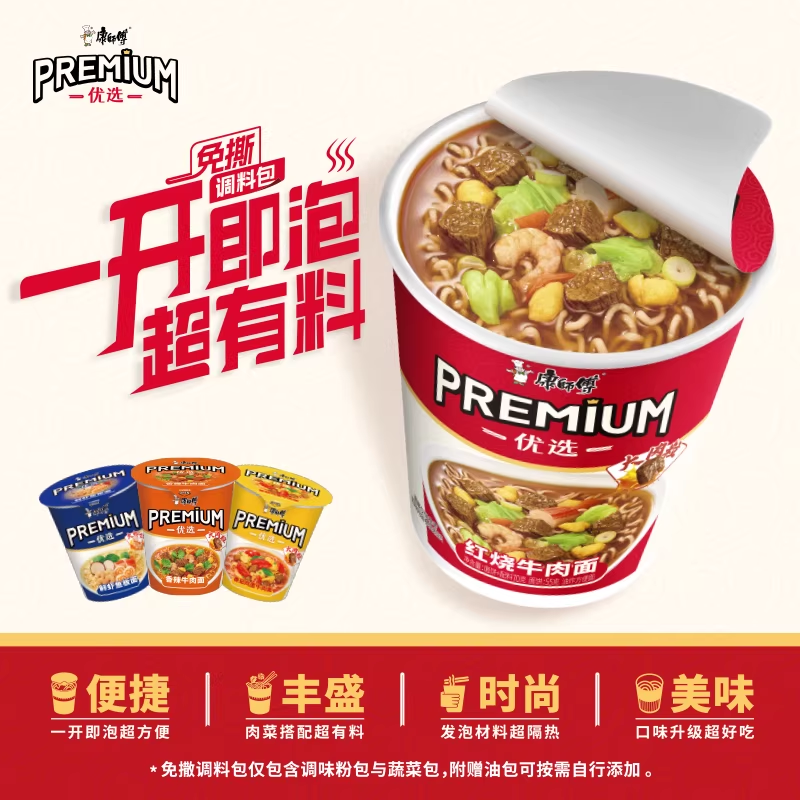
康师傅 (Master Kong) is one of the backbone brands of China’s FMCG market in instant noodles, beverages, and ready‑to‑eat products. Historically, the brand has been associated with everyday, affordable comfort food and “home‑style” taste for the mass consumer.
Over recent decades, the brand has acted as a barometer of the middle class and mass consumer: the dynamics of its sales and product portfolio reflect the shift from “quantity” to “quality,” and from pure price competition to a battle for perception, health, and relevance.
-
Consumer evolution and brand challenges
As the Chinese consumer becomes more rational and benefit‑oriented, the traditional model of “an affordable, familiar everyday product” faces a number of challenges:
-
Instant noodles are shifting from the “main meal” category into the format of quick snacks and a “backup solution,” giving up part of their consumption to more balanced and functional products.
-
In beverages, pressure is increasing from new RTD players, functional brands, and local niche labels that operate via content‑commerce and live streams.
-
Young consumers in large cities see the “classic” product range as part of their childhood and “nostalgia,” rather than the obvious everyday choice.
For 康师傅 this means it must preserve scale and recognition while simultaneously reshaping product and communication for a new, more demanding consumer.
-
Noodles and ready meals: from “cheap solution” to comfort food 2.0
3.1. Portfolio and segmentation
In instant noodles, the brand traditionally covers a wide range of price levels, from basic products for price‑sensitive consumers to more expensive, premiumized lines. In recent years the emphasis has intensified on:
-
improving perceived quality (firmer noodle texture, richer broths, more “natural” flavors)
-
regional tastes and recipes adapted to local habits
-
limited editions and collaborations that renew interest in the category among young consumers.
3.2. Formats and functionality
The brand is gradually shifting its focus from pure “cheap calories” toward convenience, taste, and emotional comfort:
-
“large portion” and “bowl‑mug” formats targeting office workers and students who see the product as a quick yet still full meal
-
recipe updates emphasizing a “cleaner” taste and reducing the perception of excessive greasiness and saltiness
-
launches of products that are easy to combine with other ingredients (vegetables, egg, meat), turning “noodles” into a home‑style set.
In communication this makes it possible to move away from the image of a “cheap emergency option” toward comfort food that can fit into a more conscious diet.
-
Beverages: competing with the new generation of RTD brands
4.1. Strengths in beverages
In beverages, 康师傅 retains a significant share in categories such as:
-
tea drinks (including traditional flavors adapted to mass preferences)
-
soft drinks and water
-
specific lines aimed at a young audience.
The brand’s key advantages in beverages are extensive distribution, availability in traditional retail and chains, high recognition, and trust in stable quality.
4.2. Pressure from functional and niche players
Against the backdrop of growth in functional drinks and the content‑driven RTD market, the brand faces several challenges:
-
new players offer sharper functional value (energy, sleep, gut health, beauty) and work more aggressively on visual differentiation
-
local and niche brands emerge with strong regional identities and more resonant storytelling
-
the growing share of online purchases and instant retail amplifies the role of visual merchandising and in‑app recommendations, where a classic mass brand does not always win on engagement.
康师傅 responds with updated beverage lines, recipe experiments (less sugar, new flavors, combined formulas), and a gradual strengthening of its presence in digital channels.
-
Channels: relying on scale and catching up in digitalization
5.1. Offline scale as a long‑term advantage
One of 康师傅’s key strengths is its historically built‑out distribution:
-
presence in traditional retail, small neighborhood stores, kiosks, and “near station/on‑the‑go” formats
-
extensive coverage of tier‑3 and tier‑4 cities and counties, which are becoming important sources of FMCG consumption growth
-
strong positions in major retail chains thanks to its status as an “anchor” brand in key categories.
This enables the brand to remain the “default” choice in the baskets of millions of households even amid intensifying competition.
5.2. Digital channels and instant retail
At the same time, the market is shifting to an omni‑channel model, where brand strength is determined not only by offline shelf presence but also by:
-
visibility in e‑commerce and marketplaces
-
ranking and presence in quick‑delivery apps
-
integration into content‑ and social‑commerce, live streams, and influencer recommendations.
For 康师傅 the key task is to transfer its offline strength into the digital realm: using its scale and recognition to secure “default choice” status in online channels as well, while maintaining competitive recommendations and promotional offers.
-
Communication and brand architecture: balancing nostalgia and relevance
6.1. “Brand of childhood” vs “brand of today”
For older and middle‑aged consumers, 康师傅 is associated with nostalgia, stability, and familiar taste. For younger audiences it is important to have:
-
a sense of “modernity” and relevance in the visual language
-
participation of the brand in the cultural agenda (collaborations, campaigns, content integrations)
-
product lines reflecting their ideas of healthy and conscious consumption.
The brand needs to manage this balance: preserving recognizable elements (logo, core flavors, key products) while launching sharper, more contemporary sub‑brands and lines.
6.2. Storylines in communication
The main storylines the brand can use are:
-
“Affordable comfort and taste the whole family understands” – for basic products
-
“Modern urban rhythm” – for updated formats and beverages tied to office and student life
-
“Thought‑through choice” – for lines focusing on quality, improved composition, and more functional characteristics.
-
Implications for CIS retailers and distributors
For partners from the CIS, the 康师傅 brand is attractive for several reasons:
-
Mass recognition and trust inside China, which indicates a robust operating model and quality.