
 RU
RU
 CN
CN
How Russian and CIS Retail Chains Import from China
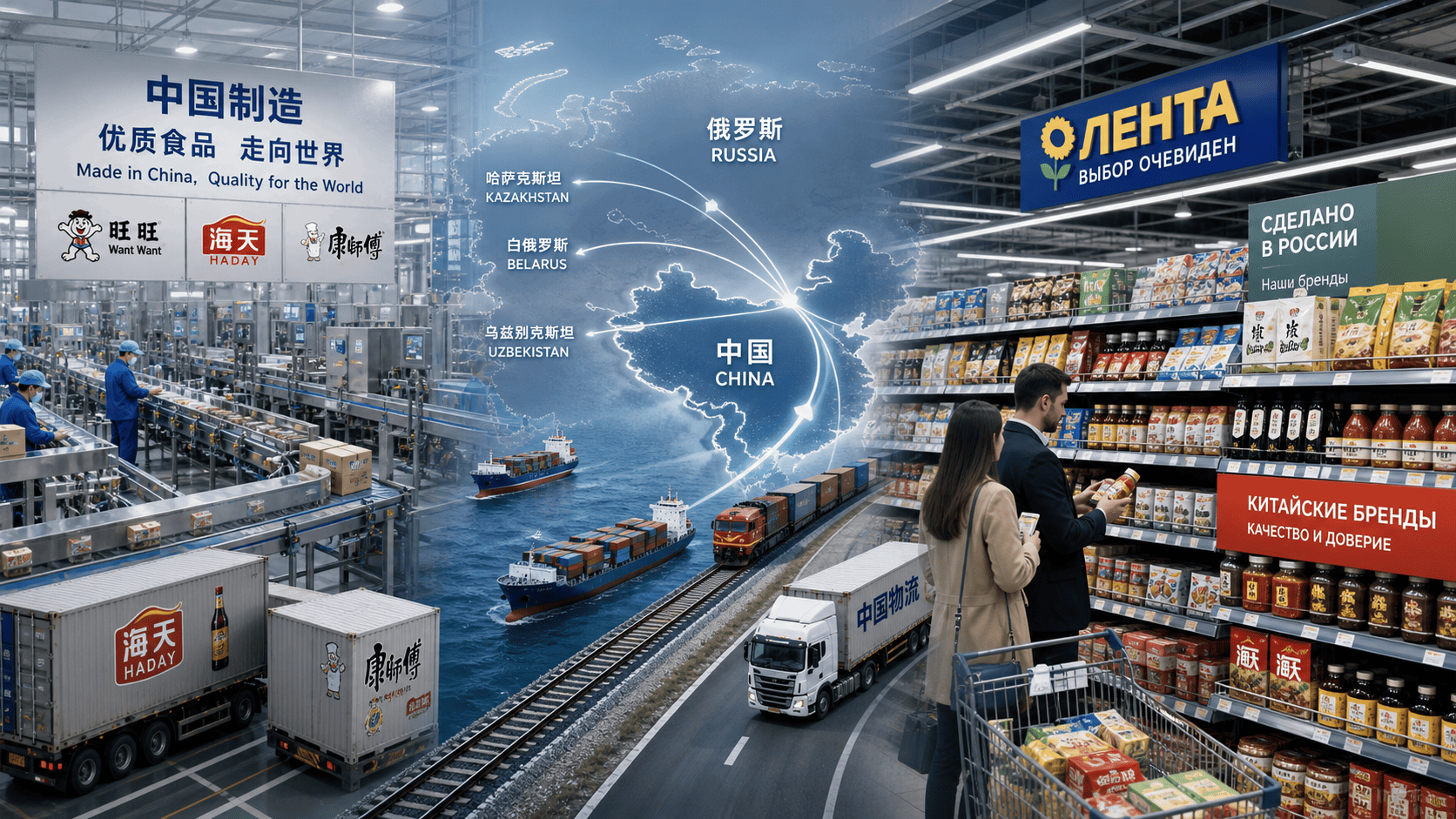
In recent years, major Russian and CIS retail chains have sharply increased direct procurement from China and expanded the share of their private‑label products. Partly this is a reaction to the exit of several international brands; partly it is a strategic choice, as retailers want tighter control over assortment, pricing, and quality.
What does the entry process look like for a Chinese supplier?
Unlike in China, where a quick contact and a flexible pilot order can be enough to start, working with a large retailer in Russia or the CIS is a formal, multi‑stage process. First, the buying team builds a category strategy: which price segments they want to cover, under which brands, and what share of private label versus national brands they need on the shelf.
Next, the chain looks for suppliers for a specific task: to manufacture a private‑label range, to supply a finished brand under direct import, or to work as an OEM/ODM partner for a local distributor. Before negotiations begin, the supplier passes an initial screening: financial stability, production capacity, certifications, and compliance with Eurasian Economic Union (EAEU) rules, including EAC marking and veterinary or other mandatory approvals. Then come test shipments, deliveries to distribution centers, in‑store promotions, and an assessment of sell‑through. Only after a successful pilot does the chain scale up purchases. For many Chinese factories this is unusual: they expect a quick “we like your product – here is the order”, but in reality the cycle can take from several months to a full year.
Why are retailers increasingly buying directly instead of through intermediaries?
Large Russian and CIS chains have set up their own sourcing teams for China and dedicated direct‑import departments. A direct contract allows them to remove part of the intermediary margin and keep shelf prices within a range that is very sensitive for consumers.
Retailers also want transparency: to see the factory, understand the real cost structure, and have influence over formulation, packaging, and logistics. Many of them are building long‑term categories around Chinese suppliers and do not want to depend on a local importer who may change priorities or leave the market. As a result, the role of the classic importer is changing: from “the sole owner of the brand” to a service partner for both the chain and the factory, responsible for certification, logistics, and operational support.
Why are private labels and direct imports gaining share?
According to INFOLine, in 2024 private‑label sales among the top‑10 Russian FMCG retailers grew by about 24% to roughly 2.35 trillion rubles, with private labels approaching one quarter of their total turnover. This is not a short‑term spike, but a deliberate strategy.
Private labels give retailers a unique proposition on the shelf and allow much finer control over margins and price positioning. After some international brands left, gaps appeared on the shelves that were often easier to fill with private‑label products than by searching for a new global supplier. Chinese factories are a natural fit for private label: flexible manufacturing, a wide portfolio of ready‑made recipes, and experience with international quality standards. For the same reasons, direct import is also growing: it is often more attractive for a retailer to work directly with key Chinese manufacturers than to buy from traders with less transparency and higher prices.
Why do many Chinese brands struggle to understand how to enter a chain?
The core issue is that the “rules of the game” are different. In China, a brand can often enter via a marketplace, a trade show, or personal connections, and then fine‑tune operational details later. In Russia and the CIS, without a pre‑built supply model, documentation, EAC certification, logistics scheme, and clear price architecture, the buyer simply will not consider the offer.
Chinese companies rarely prepare a fully fledged, retailer‑ready package: commercial terms, guaranteed supply, marketing support, and service conditions — all in one proposal and in a format that buyers can easily present internally. This is why many factories feel, “We sent them our catalogue, but there is no reply.” From the retailer’s point of view, a catalogue is not an offer but a raw signal that cannot be taken to the commercial director as a serious business case.
From the perspective of Russian and CIS retailers, the situation is quite logical: they need clear, comparable offers from reliable factories, not dozens of scattered PDFs and business cards collected at trade fairs. This is where specialized B2B platforms come into play, connecting Chinese factories and regional chains in a single funnel. RetailChina.pro is a closed O2O platform that translates the “Chinese” sales logic into the language of Russian and CIS category managers.
We help factories assemble a full package that meets retailers’ requirements — assortment, pricing, EAC, logistics, marketing support — and present these proposals directly to the people who actually make buying decisions. For retailers, this means saving time and reducing risk: instead of chaotic incoming contacts, they receive a curated pool of manufacturers and a transparent communication format. For Chinese brands, it provides a clear entry point into the region and the ability to work not only with Russia, but simultaneously with several EAEU and CIS markets through a single interface.
We do not promise “guaranteed contracts” — the outcome always depends on the product, pricing, and the factory’s willingness to play by modern retail rules. But we do guarantee something else: every partner on our platform approaches buyers with a complete cooperation proposal on behalf of a Chinese brand and becomes visible not just in one country, but across the wider Russia–CIS region.