Screen too small

Your device screen is too small for a comfortable experience. Please use a device with a wider screen (at least 360px).

Market News

The "Grey" EAEU Certification Market is Closing: Kazakhstan and Russia Massively Annul Fake Documents
May 25, 2026

The "Grey" EAEU Certification Market is Closing: Kazakhstan and Russia Massively Annul Fake Documents

The authorities of the Eurasian Economic Union (EAEU) countries are synchronously tightening control over the safety of imported products and closing legal loopholes for the use of fake documents. Following strict restrictions from the Russian Federation, the Ministry of Trade and Integration of Kazakhstan identified and invalidated 1,113 fake certificates and declarations of conformity issued by EAEU countries. These documents were massively used by importers to bring products from third countries without actually conducting laboratory tests and confirming safety standards. Structure of Violations: Dominance of Kyrgyz Certificates According to official statistics from the Ministry of Trade of Kazakhstan for May 2026, the vast majority of the annulled documents were processed through laboratories and certification bodies of the Kyrgyz Republic. They accounted for 742 documents (66.7% of the total). For comparison: 244 annulled documents were issued by bodies of the Russian Federation, and 11 by the Republic of Belarus. Representatives of the relevant departments note that using the jurisdiction of Kyrgyzstan for the mass processing of permissive documentation without providing real samples for testing has long remained a common practice among importers seeking to speed up and reduce the cost of customs clearance. Russia Expands Blocking Powers Kazakhstan's actions are a continuation of a systemic trend previously initiated by the Russian Federation. On February 7, 2026, Government Decree No. 87 came into force in the Russian Federation, significantly expanding the powers of Rosakkreditatsiya (Federal Accreditation Service) to control documents issued in other EAEU countries. Now, the Russian agency has the right to immediately suspend foreign certificates based on information from the Federal Customs Service (FCS) if: there is no confirmation that test samples actually crossed the border; non-compliance of products with safety requirements is revealed based on the results of customs examination; legitimate test reports are missing. Moreover, a strict rule has been introduced against violators: if certificates of one foreign EAEU body are suspended three or more times within a year, Rosakkreditatsiya has the right to annul the validity of absolutely all documents issued by this body in the Russian Federation over the subsequent 12 months. In practice, the new rules are already being applied: starting February 9, 2026, Russia has terminated the validity of documents issued by five certification bodies of the Kyrgyz Republic. In response to severe sanctions from EAEU partners and to normalize the situation in the domestic market, the authorities of Kyrgyzstan were also forced to begin a large-scale cleanup: the accreditation of a number of private conformity assessment bodies caught issuing fake documents is being suspended and annulled in the country. Impact on International Trade The tightening of control and the massive annulment of certificates are radically changing logistics rules for exporters from third countries, in particular from China. The practice of processing "fast" certificates through third-party EAEU jurisdictions now carries direct financial risks: products with dubious documents are not allowed into circulation, cargo is blocked at customs, and transport vehicles are subject to return. For uninterrupted deliveries to the markets of the EAEU countries, manufacturers and importers must transition to processing permissive documentation exclusively through legitimate accredited bodies directly in the country of final sale, with the mandatory official import of samples for real laboratory testing.
EAEU Cancels Special Permits for Cargo Transit on International Highways
May 24, 2026

EAEU Cancels Special Permits for Cargo Transit on International Highways

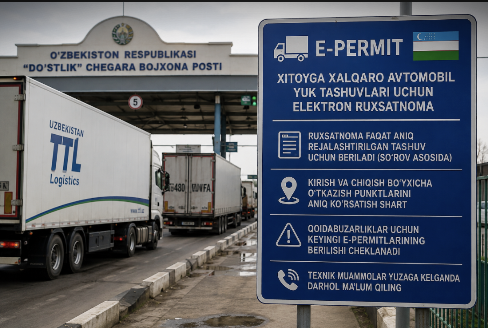
The Eurasian Economic Union (EAEU) has significantly simplified logistics rules along international transport corridors. According to the Eurasian Economic Commission (EEC) press service, transport companies are no longer required to obtain special permits for the transit of heavy goods vehicles through the territory of the association's member states. Cost Optimization The removal of excessive bureaucratic barriers allows carriers to deliver batches of goods in their entirety. The need to artificially split cargo to pass formal procedures under old regulations has disappeared. According to the department's estimates, the direct financial benefit for transport and trade businesses from this innovation can reach 15% in some cases. "This is a landmark event, confirming the focus of the 'five' countries on creating a single transport space," emphasized EEC Minister for Energy and Infrastructure Arzybek Kozhoshev. Significance for Chinese Food Imports For Chinese food exporters, this measure is a major logistical advantage. Using transit land routes through Kazakhstan or Kyrgyzstan to deliver food products to Russia becomes faster and more predictable. The ability to transport entire batches without splitting is critically important for food products, as it eliminates unnecessary reloading stages in warehouses, minimizes the risks of temperature regime violations, and preserves the integrity of factory packaging.
Russian Customs will turn back trucks without a SPOT digital code
May 23, 2026

Russian Customs will turn back trucks without a SPOT digital code

The Federal Customs Service (FCS) of Russia has officially confirmed its status as the main controlling body of the new import traceability system (SPOT). Starting June 1, 2026, new rules for importing goods by road transport from the Eurasian Economic Union (EAEU) countries will come into force. The agency has already prepared the regulatory framework to block violators directly at border checkpoints. Grounds for returning cargoAccording to the Order of the FCS of Russia No. 380 dated May 6, 2026, an official form of a directive obliging a cargo vehicle to immediately leave the territory of the Russian Federation has been approved. Inspectors will issue departure directives in three cases: The driver lacks a visualized link (a unique QR code). The document on the upcoming delivery of goods (DOPP) lacks the required status permitting entry. Identification of any discrepancies between the information specified in the DOPP electronic system and the actual data in the shipping documents provided by the carrier. For Chinese food exporters sending cargo via overland transit through EAEU countries (for example, Kazakhstan or Belarus), this marks the beginning of a zero-tolerance period for errors in logistics documentation. Any inaccuracy in TN VED (HS) codes, batch weight, or requisite details will lead to the truck being forcibly turned back across the border. This threatens significant financial losses and food spoilage due to temperature regime violations during downtime.
Imports of Chinese Dairy and Chilled Products into the EAEU: Cold Chain as a Bottleneck and a Growth Opportunity
May 22, 2026

Imports of Chinese Dairy and Chilled Products into the EAEU: Cold Chain as a Bottleneck and a Growth Opportunity

Interest in Chinese dairy and chilled products in Russia and the wider EAEU is gradually increasing, but the actual scale of imports remains constrained less by demand than by infrastructure and regulation. The most sensitive categories are yogurt, dairy desserts, fresh milk products, and chilled ready meals. In these segments, the long cold chain from China to Russia, Kazakhstan, and Belarus is not just a logistics challenge; it is the main factor that determines whether the business case works at all. In 2025–2026, the EAEU market is sending two signals at once. On the one hand, internal dairy production within the union remains strong: Belarus is expected to exceed 9 million tons of milk output in 2025, while Russia exported more than $500 million worth of dairy products in 2025, led by cheese, fermented dairy, and ice cream. On the other hand, this does not eliminate demand for niche, innovative, and Asian-style categories, especially in big cities and the premium modern-trade segment. Why the cold chain remains the key barrier For milk powder, ice cream, or shelf-stable dairy, logistics is comparatively predictable: products travel longer, temperature control is more forgiving, and shelf life offers more room for delay. Chilled categories are very different. If the product must remain in a stable chilled range and has a short or medium shelf life, every leg of the route — factory, consolidation warehouse, border crossing, distribution center, retail shelf — becomes a risk point. The problem is not just distance. More importantly, the China–EAEU route for chilled products is often multimodal, involving different transport modes, transshipment points, and several logistics operators. That increases the chance of temperature deviations, delays, document mismatches, and shelf-life loss before the product even reaches the store. For chilled yogurt or dairy desserts, even a small delay can mean not simply higher cost, but the loss of the entire batch. Regulation puts additional pressure on unit economics Even when logistics is well managed, imports of chilled dairy and milk-based ready meals into the EAEU face strict veterinary and technical requirements. Unified EAEU veterinary rules allow imports of milk and dairy products only from compliant territories and facilities, while amendments to union technical regulations continue tightening maximum residue levels for veterinary medicines in food products of animal origin. In practical terms, this means a Chinese exporter needs more than a good product and a refrigerated warehouse. It needs an approved facility, correctly issued veterinary documentation, traceability, compliant labeling, and a local partner that understands how the product moves through Russian, Kazakh, or Belarusian control systems. For highly perishable chilled products, paperwork errors are far more expensive than in dry or frozen categories because the time available to fix them is limited by the product’s own commercial life. Russia, Kazakhstan, and Belarus are three different entry scenarios Although these markets sit within the same EAEU framework, the real entry models differ. Russia is the largest and most attractive market, but also the most demanding in terms of logistics, retail scale, and sell-through expectations. Kazakhstan is interesting as a more compact test market, yet researchers note that weak cold-chain infrastructure remains a constraint in convenience and frozen foods, while the market is becoming more selective about imported innovation. Belarus, by contrast, has a strong domestic dairy base and a mature understanding of cold logistics, which makes it less of a simple sales market and more of a potential hub for processing, repacking, and industrial partnership. Case 1: why major Chinese dairy players historically leaned toward shelf-stable and frozen categories The strategic logic of China’s largest dairy groups is revealing. Morningstar notes that Yili historically focused on UHT milk and yogurt segments in light of the still underdeveloped cold-chain system even within China itself. Mengniu reported growth in chilled yogurt, fresh milk, cheese, and ice cream in 2025, but this expansion was built on a deep domestic distribution network and internal diversification, not on large-scale long-distance exports of chilled products. For the EAEU, this sends an important message. Even large Chinese dairy companies with advanced domestic supply chains usually build chilled scale at home first, and only then approach more complex long-distance formats. That suggests that entry into Russia, Kazakhstan, or Belarus is more likely to succeed when brands start with shelf-stable dairy, frozen or semi-finished solutions, or local manufacturing partnerships, rather than attempting direct exports of short-life chilled SKUs from day one. Case 2: the hybrid model through local processing A second workable model is to avoid shipping a finished chilled yogurt or dessert all the way from China into the EAEU. Instead, the value chain is split. Starters, bases, fillings, flavor systems, packaging solutions, or semi-finished components with more stable logistics are shipped from China, while final processing, filling, or assembly of the chilled product takes place in Russia or Belarus. Commercially, this reduces pressure on the cold chain, simplifies part of the veterinary and customs process, and allows shelf life to be calibrated to local retail realities. This model is especially relevant for dairy desserts, drinking yogurts, and chilled ready meals with milk components, where success on shelf depends not only on taste, but also on the remaining shelf life at the moment the retailer accepts the goods. Where the growth point lies in 2026 The paradox is that cold chain is both the bottleneck and the opportunity. Globally, chilled remains the largest segment of cold chain logistics, while Russia’s food logistics market continues to grow in value, meaning that infrastructure will keep expanding alongside demand. Demand fundamentals are also moving in the right direction: ready meals, convenience formats, and more sophisticated dairy categories are gradually developing across the region, especially in large urban centers and modern retail. For Chinese companies, this means cold chain should be treated not only as a technical problem, but as part of go-to-market strategy. Over the next 12–24 months, the strongest chances will belong to those that enter in stages: first with shelf-stable or frozen products, then with hybrid models involving local packing or finishing, and only after that with direct chilled imports for selected premium SKUs in cities with stable cold-chain infrastructure. From a market perspective, Chinese chilled dairy products and ready-to-eat refrigerated meals have real potential in the EAEU — but only with the right market‑entry architecture. The mistake many suppliers make is trying to sell into Russia, Kazakhstan, or Belarus with exactly the same products and go‑to‑market logic they use inside China. In practice, for retail chains and importers, taste and price are only part of the equation; what also matters is remaining shelf life, temperature stability along the entire route, legal cleanliness of the import process, and the supplier’s ability to deliver consistent batches over time. RetailChina.pro does not see its role as promising “fast contracts” in a complex chilled category, but rather as designing the right route for a brand to enter the region. For some companies, this means starting with more logistically robust SKUs and testing demand through distribution or retail pilots; for others, it means finding an industrial partner in Russia or Belarus and moving the final assembly of the product closer to the shelf. This approach reduces risk for all parties and makes the Chinese brand visible not just in a single market, but across the broader EAEU and CIS ecosystem.
Drought forces Mongolia to massively purchase imported seed potatoes
May 21, 2026

Drought forces Mongolia to massively purchase imported seed potatoes

Mongolia’s agro-industrial sector has faced a serious shortage of seed potatoes caused by the large-scale drought of 2025. In order not to disrupt the current planting campaign, the country has been forced to urgently compensate for the raw material shortage through external markets. At present, international contracts have already been concluded for the import of about 4 thousand tons of seed material from the Russian Federation. “Russian seed potatoes are now effectively sustaining the parameters of the planting campaign, despite the high price and cautious demand from farmers,” said Mongolia’s Minister of Agriculture. In the domestic market, the cost of imported seeds reaches high levels — from 1,800 to 2,300 tugriks per kilogram, forcing local agricultural enterprises to approach procurement in an extremely pragmatic manner. Chinese producers and investors can take leading positions in this market by offering: Comprehensive solutions for vegetable storage, including modern hangars and climate control systems. Drip irrigation systems and agricultural machinery. Joint projects to localize seed production bases using drought-resistant varieties of Asian breeding. Flexible financial instruments, including equipment leasing for farmers sensitive to high prices.
How Russian and CIS Retail Chains Import from China
May 20, 2026

How Russian and CIS Retail Chains Import from China

In recent years, major Russian and CIS retail chains have sharply increased direct procurement from China and expanded the share of their private‑label products. Partly this is a reaction to the exit of several international brands; partly it is a strategic choice, as retailers want tighter control over assortment, pricing, and quality. What does the entry process look like for a Chinese supplier? Unlike in China, where a quick contact and a flexible pilot order can be enough to start, working with a large retailer in Russia or the CIS is a formal, multi‑stage process. First, the buying team builds a category strategy: which price segments they want to cover, under which brands, and what share of private label versus national brands they need on the shelf. Next, the chain looks for suppliers for a specific task: to manufacture a private‑label range, to supply a finished brand under direct import, or to work as an OEM/ODM partner for a local distributor. Before negotiations begin, the supplier passes an initial screening: financial stability, production capacity, certifications, and compliance with Eurasian Economic Union (EAEU) rules, including EAC marking and veterinary or other mandatory approvals. Then come test shipments, deliveries to distribution centers, in‑store promotions, and an assessment of sell‑through. Only after a successful pilot does the chain scale up purchases. For many Chinese factories this is unusual: they expect a quick “we like your product – here is the order”, but in reality the cycle can take from several months to a full year. Why are retailers increasingly buying directly instead of through intermediaries? Large Russian and CIS chains have set up their own sourcing teams for China and dedicated direct‑import departments. A direct contract allows them to remove part of the intermediary margin and keep shelf prices within a range that is very sensitive for consumers. Retailers also want transparency: to see the factory, understand the real cost structure, and have influence over formulation, packaging, and logistics. Many of them are building long‑term categories around Chinese suppliers and do not want to depend on a local importer who may change priorities or leave the market. As a result, the role of the classic importer is changing: from “the sole owner of the brand” to a service partner for both the chain and the factory, responsible for certification, logistics, and operational support. Why are private labels and direct imports gaining share? According to INFOLine, in 2024 private‑label sales among the top‑10 Russian FMCG retailers grew by about 24% to roughly 2.35 trillion rubles, with private labels approaching one quarter of their total turnover. This is not a short‑term spike, but a deliberate strategy. Private labels give retailers a unique proposition on the shelf and allow much finer control over margins and price positioning. After some international brands left, gaps appeared on the shelves that were often easier to fill with private‑label products than by searching for a new global supplier. Chinese factories are a natural fit for private label: flexible manufacturing, a wide portfolio of ready‑made recipes, and experience with international quality standards. For the same reasons, direct import is also growing: it is often more attractive for a retailer to work directly with key Chinese manufacturers than to buy from traders with less transparency and higher prices. Why do many Chinese brands struggle to understand how to enter a chain? The core issue is that the “rules of the game” are different. In China, a brand can often enter via a marketplace, a trade show, or personal connections, and then fine‑tune operational details later. In Russia and the CIS, without a pre‑built supply model, documentation, EAC certification, logistics scheme, and clear price architecture, the buyer simply will not consider the offer. Chinese companies rarely prepare a fully fledged, retailer‑ready package: commercial terms, guaranteed supply, marketing support, and service conditions — all in one proposal and in a format that buyers can easily present internally. This is why many factories feel, “We sent them our catalogue, but there is no reply.” From the retailer’s point of view, a catalogue is not an offer but a raw signal that cannot be taken to the commercial director as a serious business case. From the perspective of Russian and CIS retailers, the situation is quite logical: they need clear, comparable offers from reliable factories, not dozens of scattered PDFs and business cards collected at trade fairs. This is where specialized B2B platforms come into play, connecting Chinese factories and regional chains in a single funnel. RetailChina.pro is a closed O2O platform that translates the “Chinese” sales logic into the language of Russian and CIS category managers. We help factories assemble a full package that meets retailers’ requirements — assortment, pricing, EAC, logistics, marketing support — and present these proposals directly to the people who actually make buying decisions. For retailers, this means saving time and reducing risk: instead of chaotic incoming contacts, they receive a curated pool of manufacturers and a transparent communication format. For Chinese brands, it provides a clear entry point into the region and the ability to work not only with Russia, but simultaneously with several EAEU and CIS markets through a single interface. We do not promise “guaranteed contracts” — the outcome always depends on the product, pricing, and the factory’s willingness to play by modern retail rules. But we do guarantee something else: every partner on our platform approaches buyers with a complete cooperation proposal on behalf of a Chinese brand and becomes visible not just in one country, but across the wider Russia–CIS region.
Explosive Import Growth: How Chinese Bakery Products Are Taking Over Russian Store Shelves
May 19, 2026

Explosive Import Growth: How Chinese Bakery Products Are Taking Over Russian Store Shelves

Ready-made Chinese bakery products have definitively ceased to be a niche product and can now be found in almost every store. An analysis of store shelves from Vladivostok to Moscow—both in specialized Chinese grocery stores and major federal retail chains (Perekrestok, Magnit)—coupled with the latest customs statistics from the PRC, demonstrates a powerful new trend: a multiple-fold growth in the import of bakery products. Ready-made buns with various fillings, such as chocolate, cheese, milk, and banana, are increasingly appearing on Russian store shelves From Niche to Mass Market and Price Differences An analysis of price tags clearly demonstrates the impact of the logistics chain on the final cost. Prices for the same product range from 75 to 149 rubles. For example, in a Chinese grocery store in Vladivostok operating via direct import from China, the price is 75 rubles. At the same time, in the federal retail chain Perekrestok, where the product arrives through a distributor, the cost reaches 149 rubles. Notably, with direct imports into the Magnit chain for a similar product of the same brand (Date - 约惠), the price remains highly competitive due to the absence of intermediaries. For retail chains, amidst the rapidly growing trend for Asian products, this is an ideal item with high impulse appeal. Such pastry products have a long shelf life (from 180 days), are sold in individual packaging, and do not require refrigeration. Some products are supplied with Russified stickers, but some Chinese manufacturers are already printing Russian text directly on the original factory packaging. GACC Statistics Confirm the Trend Official data from the General Administration of Customs of the PRC (GACC) under HS code 190590 ("Other bread, pastry, cakes, biscuits and other bakers' wares") show unprecedented dynamics in exports to Russia: 7.5-fold growth over 5 years: In 2020, exports of bakery products under this code amounted to 13.6 million yuan. By the end of 2025, it broke the all-time record, reaching 101.6 million yuan. Record start in 2026: In the first quarter of 2026 alone, Russia imported 28.78 million yuan (about $4 million) worth of such products. This is 60% more than in the same period of 2025 (17.9 million yuan). A Window of Opportunity for Suppliers The successful entry of the first Chinese brands into federal retail is a clear signal to other manufacturers: the Russian mass market is open to new formats of bakery snacks. However, to firmly establish a foothold in the market rather than just making a one-time shipment, Chinese factories need to implement a systematic approach. Today, the key factors for success are deep packaging adaptation to local standards, targeted product promotion, and increasing the brand awareness of their own trademarks among end consumers.  
EAEU introduces a single code for customs clearance of starch noodles
May 18, 2026

EAEU introduces a single code for customs clearance of starch noodles

New classification rules The Board of the Eurasian Economic Commission (EEC) has officially approved new classification rules for starch noodles, also known as funchoza or glass noodles. According to Decision No. 51 dated April 28, 2026, this product category is now unequivocally classified under heading 1901 of the unified Commodity Nomenclature of Foreign Economic Activity (TN VED) of the EAEU. The official document establishes clear criteria for the product: it is noodles or vermicelli made by mixing various types of starch with water, which is then formed into long threads and dried for subsequent human consumption. The decision enters into legal force upon the expiration of 30 calendar days from the date of its official publication. For Chinese food manufacturers, this is extremely positive news. A unified classification eliminates discrepancies at the customs of CIS countries.
Azbuka Vkusa E-commerce: 42% Growth in Delivery Orders in Q1 2026
May 17, 2026

Azbuka Vkusa E-commerce: 42% Growth in Delivery Orders in Q1 2026

Company Profile The Azbuka Vkusa retail network specializes in the premium segment, operating over 170 stores in Moscow, the Moscow Region, and St. Petersburg. In May 2025, a controlling stake (81.55%) in the company was acquired by the federal retailer Magnit for 29.65 billion rubles, reaching 84.05% by July of the same year. The deal preserved the Azbuka Vkusa brand and its operational management. Alongside physical retail, the company actively develops its own culinary production and e-commerce divisions. Q1 2026 Operational Results According to Q1 2026 reporting, the number of orders through the network's proprietary express delivery service increased by 42% year-over-year. Revenue in this segment demonstrated a 60% growth. The primary transaction volume was generated through the company's proprietary digital channels—its official website and mobile app. Customer engagement analytics show a positive dynamic: Over a month, the share of customers returning for repeat purchases via online channels grew by 25%. The active digital audience increased by 8%. Among authorized app users, the share of completed orders increased 1.5 times, and the average purchase size grew by 9 percentage points. Throughout 2025, 1.2 million orders were fulfilled via Azbuka Vkusa's proprietary platforms. New user growth over the past year was 24%, while the in-store pickup segment order volume increased by 36%. Management Assessment Commenting on the operational results, Pavel Shilin, Vice President of E-commerce at Azbuka Vkusa, emphasized the focus on omnichannel strategies: "The winners are not those who simply have an online or offline presence, but those who provide a unified customer experience. We focused on reengineering core processes around the customer and service, which allowed us to meet our financial targets and turn the online segment into one of the company's growth drivers." The steady growth of Azbuka Vkusa's online metrics indicates the effective integration of O2O (Online-to-Offline) strategies widely used in Asian e-commerce. Focusing on the development of a proprietary mobile app allows the retailer to minimize its reliance on third-party aggregators and build a loyal audience within a closed ecosystem. The integration into Magnit's structure in 2025 provided Azbuka Vkusa with significant operational and financial resources to accelerate this technological transformation, the results of which are reflected in the Q1 2026 performance.
Rosselkhoznadzor restricts poultry imports from two Chinese plants
May 16, 2026

Rosselkhoznadzor restricts poultry imports from two Chinese plants

The Federal Service for Veterinary and Phytosanitary Surveillance (Rosselkhoznadzor) has imposed restrictions on poultry meat supplies from two Chinese enterprises: Heilongjiang Chia Tai Enterprise Co., Ltd. and Heilongjiang Grand Forest Food Group Co., Ltd. The reason was the detection of serious sanitary violations. Specialists found Listeria bacteria in a 22.4-ton shipment of frozen chicken breast that had arrived in Primorsky Krai. Trade turnover dynamics Despite tighter control by the Russian authority, the overall volume of Chinese poultry supplies to the Russian market continues to show steady growth. Chinese producers remain key partners for the Russian meat processing market, helping to offset the local shortage of raw materials. According to statistics from the General Administration of Customs of the People’s Republic of China, poultry meat exports to Russia reached USD 39.5 million in the first quarter of 2026. This figure is 2.2 times higher than in the same period last year. In March 2026 alone, exports amounted to USD 12.9 million, compared with USD 9.1 million a year earlier.
Logistics Brief: Eurasia’s International Transport Corridors in April–May 2026
May 15, 2026

Logistics Brief: Eurasia’s International Transport Corridors in April–May 2026

In spring 2026, Eurasian logistics saw a further redistribution of cargo flows between the northern, Trans-Caspian, and southern routes. Against the backdrop of continuing risks for maritime shipping, part of the market increased its use of overland corridors linking China, Europe, Russia, the Caucasus, and Central Asia. According to Russia’s Ministry of Transport, in March 2026 the volume of transit container traffic between China and Europe via Russian territory rose by 45% year on year, from 21,000 to 31,000 TEU. This dynamic reflects a recovery in demand for the overland route amid restrictions and longer transit times on part of the maritime network. At the same time, infrastructure constraints remain in place. Market participants point to dependence on quota allocation by China Railway and limited slot availability, both of which affect planning flexibility and transportation costs on certain routes. The Trans-Caspian International Transport Route continued to expand. In the first quarter of 2026, 85 container trains travelled from Xi’an to the port of Alat via Kazakhstan, which was more than double the figure recorded a year earlier. Against this backdrop, according to Argus, the cost of shipping a 40-foot high-cube container from Xi’an to Baku in April 2026 stood at $6,300–6,700, compared with $6,000–6,500 in March. Market participants cited higher fuel and insurance costs as the main drivers of the increase. Another development on the Trans-Caspian route was the growing focus on eastbound traffic. Operators began to systematically work on loading the corridor from Europe and Turkey towards China in order to reduce empty container repositioning and improve the resilience of the service. At the same time, new southern multimodal chains continued to take shape. In spring 2026, a new China–Afghanistan route via Kazakhstan, Uzbekistan, and Turkmenistan was launched. According to published data, the route is about 7,400 km long and the average transit time is around 30 days. The new route became an alternative to the previous scheme, under which cargo was shipped mainly by sea to the Iranian port of Bandar Abbas and then moved overland to Afghanistan. The more direct land corridor improves delivery predictability and broadens the range of available logistics options for the southern direction. Another notable trend was the continued digitalisation of border infrastructure. At Chinese border crossings, including Alashankou, the “smart rail port” model continued to be rolled out, combining electronic documentation with faster customs processing. As a result, in April–May 2026 Eurasia’s logistics architecture continued to evolve along several tracks at once: transit via Russia increased, activity on the Trans-Caspian route expanded, and additional southern corridors were developed. For foreign trade participants, this means a greater need for flexible route planning and for taking into account differences in tariffs, transit times, and infrastructure constraints across each corridor. Analysis of Eurasia’s transit corridors in spring 2026 points to a trend toward route diversification. For importers in the CIS, this means moving away from dependence on a single supply channel in favour of developing backup logistics schemes. In an environment of limited quotas and local tariff fluctuations, an importer’s key competitive advantage increasingly lies in working with digitalised logistics operators that have access to infrastructure on both the Northern and Trans-Caspian corridors.    
Belarus: the largest retailer continues network expansion
May 14, 2026

Belarus: the largest retailer continues network expansion

The largest grocery retailer in Belarus, “Evrotorg” (brand “Evroopt”), has announced further network expansion and new hiring. In 2026, the company is continuing to open new stores in the regions, with a key focus on proximity “at‑home” formats and modern supermarkets in residential areas of major cities. For the local market this is a signal that the retailer is not only maintaining its position, but is also ready to invest in physical infrastructure even under conditions of unstable consumer demand. For several years “Evrotorg” has held first place in the country by revenue and remains the main sales channel for most FMCG brands. In the first months of 2026, the company reported billion‑BYN turnovers, confirming revenue growth and a strong market share. Against this backdrop, the retailer is strengthening its team, expanding its logistics network and betting on digital services for customers: loyalty programs, online storefronts and fast‑delivery services. For suppliers, including international ones, this network expansion implies two important trends. First, there is growing demand for a stable everyday assortment: food, beverages, household products and personal care items that perform well in proximity store formats. Second, new stores in the regions create additional entry points into the chain: local assortments, testing of new SKUs on small footprints and pilots with new categories. For international suppliers, including Chinese brands, Evroopt’s current strategy creates a notable window of opportunity. Belarus’s largest retailer is increasing revenue, launching new formats and actively updating its assortment, including via imported categories. At such a moment, retail chains pay particular attention to products with stable demand and reliable logistics — exactly the requirements that major Chinese FMCG manufacturers can meet. Today Evrotorg operates several formats — from discounters to supermarkets — and controls a significant share of the Belarusian grocery market, including small towns and rural areas where “at‑home” and modular store formats are developing. Being listed in the chain’s assortment immediately gives a brand wide national coverage and fast access to the mass consumer. From the RetailChina.pro perspective, we see rising interest from Belarusian retail in new product solutions: ready‑to‑eat food, snacks, beverages, children’s products and affordable functional beauty & personal care. In the near future, we will prepare a dedicated selection of Chinese brands that already meet CIS retail chains’ requirements in terms of quality, packaging and supply stability and can qualify for test launches in Belarus.