
 RU
RU
 CN
CN
How “smart” shoppers are rewriting the strategy of discounters and suppliers
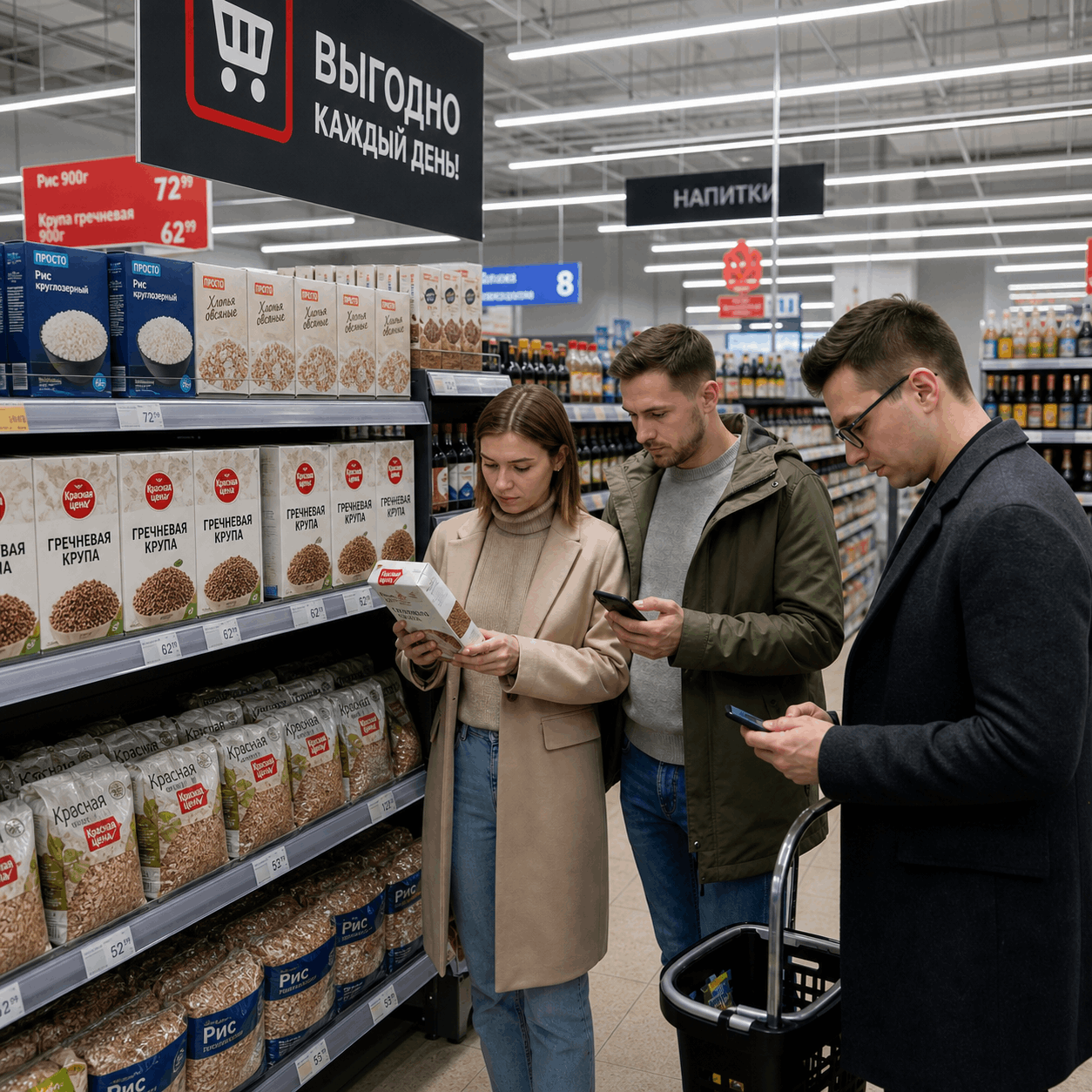
Hard-discount grocery formats in Russia are no longer perceived as “stores for the poor”. They are becoming the preferred choice for increasingly demanding, rational shoppers who carefully manage their household budgets. “Smart consumption” – when households consciously optimize spending, build baskets around value for money, and plan shopping routes and frequency – is turning from an anti-crisis reaction into a stable behavior pattern. For retailers and suppliers, this means rethinking strategy: from assortment and pricing to private label development and supplier relations.
Industry data show that more than 80% of Russian consumers now shop in discounters, and almost half of them do so more often than a year ago. For shoppers, these stores are not only about low prices: they expect predictable quality, a clear and compact assortment, and fewer “extra” SKUs whose marketing they ultimately pay for. The discounter format is becoming part of everyday logistics: people optimize routes, reduce large spontaneous hypermarket trips, and increasingly “top up” their basket at nearby discount stores.
The audience profile is also changing. The share of households with middle and above-average income is growing in discounters: these are the “smart” consumers who refuse to overpay for a brand but are ready to pay for a honest, reliable product. For them, transparent ingredients, clear packaging, and the absence of imposed services and pseudo-discounts are critical. As a result, price competition is shifting from aggressive promotions towards cost optimization and expansion of retailers’ own private labels.
Private labels are becoming a key tool for capturing “smart” demand. Retailers actively increase the share of PL in turnover, using it to offer shoppers the required quality at a controlled price while strengthening their bargaining power with manufacturers. For producers, this is both a challenge and an opportunity: they must meet strict retailer specifications, but in return they can gain stable volumes and long-term contracts in a fast-growing format.
“Smart” consumption is also changing communication with shoppers. Instead of eye-catching “-50% on everything” campaigns, there is growing demand for honest comparisons, clear unit pricing, and simple product lines without excessive flavor or packaging variations. Consumers are better informed and increasingly compare not only brands, but also channels – offline chains, marketplaces and specialized stores – before making a decision.
“For suppliers, including Chinese FMCG manufacturers, the trend towards ‘smart’ consumption in discounters is no longer just background noise – it is a basic entry requirement for the shelf,” notes RetailChina.pro. “Buyers in retail chains are increasingly asking: ‘Give us a product that fits the economics of our private label or a clear, rational product line – not just another brand with a nice story.’ This means Chinese factories must adapt recipes, packaging and logistics to tougher requirements on cost and consistent quality.”
“We also see rising interest from retailers in basic, everyday SKUs – grains, snacks, beverages, ready-to-eat and ready-to-cook products for daily use that are easy to explain to the shopper and easy to integrate into a regular basket,” the company adds. “Chinese suppliers who design products starting from the chain’s checklist – transparent ingredients, convenient pack sizes, rational pricing and readiness to work in private label or exclusive formats – will win. In the coming years, these products will largely define what the discount shelf looks like in Russia and across the CIS.”