
 RU
RU
 CN
CN
Uzbekistan Shifts E-permit Issuance for Transports to China to an "On-Demand" Principle
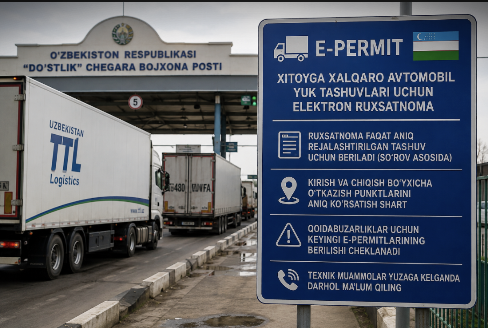
The Ministry of Transport of Uzbekistan has altered the procedure for issuing electronic permits (E-permit) for international road freight transport to China.
National carriers are now advised to apply for permits only when they have a specific planned transport and an actual need for the document. Obtaining permits unnecessarily, including keeping them "in reserve," leads to the unjustified depletion of the established quota and can limit the opportunities for other carriers.
When submitting an application, carriers are obligated to accurately specify the border crossing points through which they plan to enter and exit Chinese territory. Once the permit is obtained, carriers must comply with freight transportation rules, follow the declared route, and adhere to the requirements for staying in the PRC.
Violations committed by carriers in either Uzbekistan or China are logged by inspection services. If a violation is detected, the system will automatically restrict the carrier's ability to obtain subsequent electronic permits.
The Ministry warned of potential technical glitches during the rollout phase of the updated system. In the event of malfunctions, carriers must immediately report the issue, specifying the company name, the vehicle's state registration number, or the application number.
For the Chinese food market, the change in the E-permit issuance procedure necessitates more precise supply chain planning. Chinese food importers and exporters working with Uzbekistan must coordinate routes and border crossing points in advance to avoid permit denials and cargo delays. The strict recording of violations increases carrier accountability and may force unscrupulous companies out of the market, which in the long run will improve the stability of food logistics chains.