
 RU
RU
 CN
CN
Wahaha: How a Children’s Drink Brand Became a Symbol of Chinese FMCG
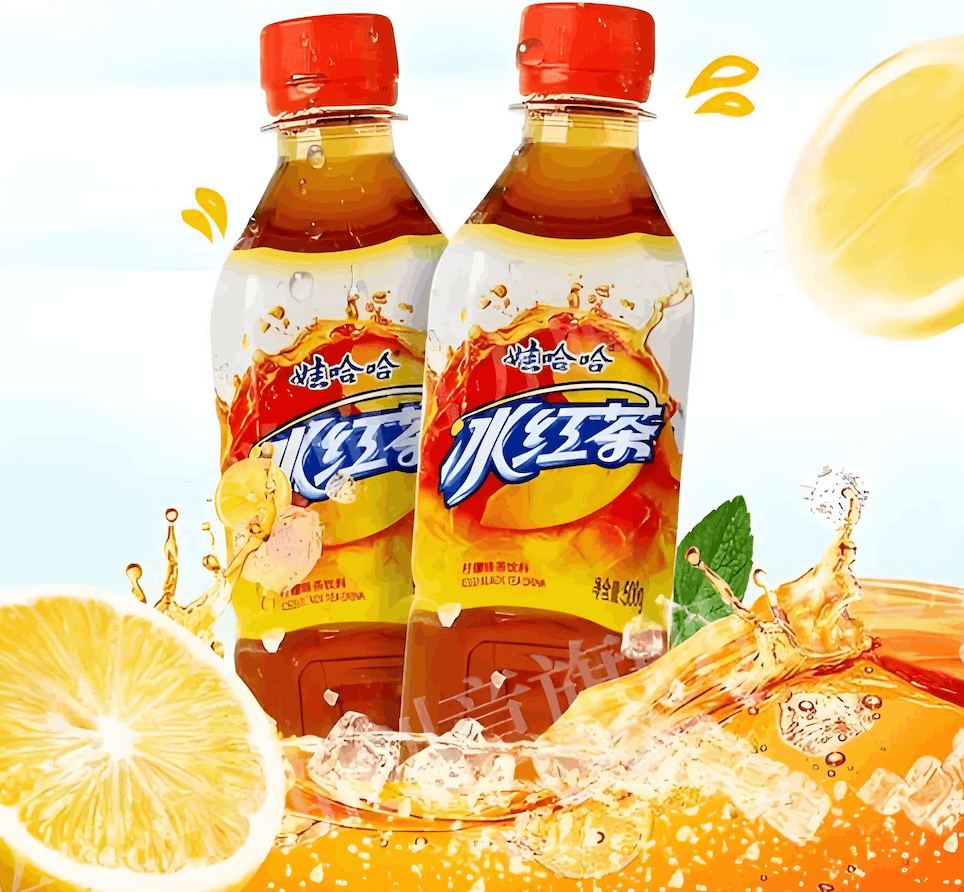
There are brands in China that everyone knows. Wahaha (娃哈哈, Wahaha) is one of them.
For Chinese consumers, it is not just a producer of water, tea or dairy drinks, but a part of everyday life for several generations – a brand that has grown together with the country, its market and its new urban culture.
From the outside, the story of Wahaha may look deceptively simple: the company appeared in the late 1980s, grew rapidly, became a major player in beverages and then moved into exports. In reality, it is a far more interesting case – the story of how a local Chinese brand managed to turn into a national champion, live through several shifts in economic eras, retain recognition and, in the 2020s, once again search for a new path to growth.
A brand that grew up with China
Hangzhou Wahaha Group Co., Ltd. (杭州娃哈哈集团有限公司, Hangzhou Wahaha Group Co., Ltd.) was founded in 1987 in Hangzhou by Zong Qinghou (宗庆后, Zong Qinghou). The starting point was modest: a small enterprise linked to children’s food and drinks. Yet exactly this focus gave the brand a crucial early advantage – the trust of parents.
The name Wahaha (娃哈哈, Wahaha) sounds light and childlike, and that has been a core part of its strength from the beginning. The brand never tried to look elitist or “Western”. On the contrary, Wahaha (娃哈哈, Wahaha) built the image of a familiar, family‑oriented label that speaks to the mass Chinese consumer in a language they understand.
This is why the company’s early success was not an accident, but a matter of timing. In the late 1980s and 1990s, China was becoming wealthier, changing fast and learning mass consumption, while Wahaha (娃哈哈, Wahaha) offered exactly what the market needed: an affordable, recognisable and emotionally close product.
Why Wahaha became successful?
Wahaha’s growth did not come down to a single hit drink. The company was built as a full‑scale FMCG machine: it expanded production, developed distribution, acquired and modernised assets, and then covered the market with a broad product line – from water to dairy drinks, from tea to carbonated beverages.
By around 2020, corporate and industry sources described Wahaha (娃哈哈, Wahaha) as a group with more than 80 production bases, roughly 180 subsidiaries and about 30,000 employees. For the Chinese market this is not just a big business, but an example of a company that has worked for decades according to the logic of scale: the wider the reach, the stronger the brand recognition, and the stronger the recognition, the easier it is to launch new categories.
This is where the main lesson of Wahaha (娃哈哈, Wahaha) lies: the brand grew not because it was fashionable, but because it became part of everyday life. In China this distinction matters a lot, because in beverages the winners are rarely those who shout the loudest in the media, but those who most often stand in the household fridge.
The market where Wahaha plays today
To understand why Wahaha (娃哈哈, Wahaha) still matters, it is worth looking at the broader Chinese beverage market. In recent years it has gone through a clear shift: consumers still love tasty and affordable mass‑market drinks, but they are increasingly choosing “healthier” categories – above all tea, functional beverages and sugar‑free products.
The trend is visible in the numbers. According to iiMedia Research, the sugar‑free beverage market in China reached 40.16 billion yuan in 2023 and could grow to 81.56 billion yuan by 2028. At the same time, the new‑style tea market is measured in hundreds of billions of yuan, underlining the central role tea continues to play in modern Chinese consumption.
Against this backdrop, interest in Wahaha (娃哈哈, Wahaha) is rising again. Historically, the brand has been associated with “classic” Chinese mass FMCG – sweet, affordable and highly recognisable drinks. Today, however, Wahaha has to fit into a new reality in which younger consumers want less sugar, more functionality and a more contemporary language of packaging and communication.
A new chapter: between legacy and renewal
For many years, the face of Wahaha (娃哈哈, Wahaha) was inseparable from its founder Zong Qinghou (宗庆后, Zong Qinghou). He was not just the company’s leader, but a symbol of Chinese private entrepreneurship – a person who managed to build a nationwide brand almost from scratch.
After Zong Qinghou’s death in February 2024, the company entered a new phase. For a general audience this is not only a story about succession, but a turning point for the brand itself: Wahaha (娃哈哈, Wahaha) now has to prove that it can remain strong not only as a “historic label”, but as a modern player able to renew itself.
One sign of this renewal has been the appearance in the public eye of a new branding line linked to a sugar‑free tea concept under the name “Wa Xiaozong” (娃小宗, Wa Xiaozong). This looks like an attempt to carefully combine the legacy of the old brand with the demand for new categories and new audiences, without breaking the core identity of Wahaha (娃哈哈, Wahaha).
Why this matters for CIS countries?
For Russian consumers, Wahaha (娃哈哈, Wahaha) is interesting not only as a “big Chinese brand”, but also as an example of how the Chinese mass market works. Seen from afar, China is often associated primarily with big tech and digital platforms, but the true depth of its consumer economy is best revealed by brands like this – everyday, mass‑market and highly resilient.
In Russia, Wahaha (娃哈哈, Wahaha) has not yet taken the shape of a federal brand with a wide official infrastructure. That does not mean it is absent: in the Russian Far East, Wahaha tea drinks have long been part of the local consumer landscape, and can be found not only in Asian grocery stores, but also in mainstream chain supermarkets and neighbourhood shops. For many consumers in the region, this is now a familiar everyday drink rather than an exotic import.
This is particularly telling for the future. Brands rarely enter big markets everywhere at once; more often they first take root where cultural and logistical barriers are lower. For Wahaha (娃哈哈, Wahaha), the natural gateway into Russia has been distribution to the Far East.
For FMCG and retail players across the CIS, the story of Wahaha (娃哈哈, Wahaha) is a reminder that “long‑lasting” Chinese brands are built not on flashy campaigns, but on systematic presence in the shopper’s everyday basket. Wahaha clearly illustrates how the Chinese beverage market is shifting toward tea and sugar‑free formats, and brands like Wahaha (娃哈哈, Wahaha) become real indicators of these changes: if they are changing their product line, it means the market itself is changing. For the CIS, the signal is clear – do not look only at large platforms and headline‑grabbing companies, but also at these “quiet” brands that in reality form the backbone of everyday consumption in China.